
In children aged 10–13, the brain is undergoing a key phase of refinement and increased efficiency. Neural systems responsible for attention, planning, emotional regulation, and decision-making are still maturing, while executive functions such as working memory, cognitive flexibility, and self-control continue to strengthen. These skills are essential for academic performance and everyday independence.
Our neurocognitive training programme combines structured movement with progressively challenging cognitive tasks. This dual-task approach enhances communication between motor and cognitive brain networks, particularly within prefrontal systems that support focus, planning, and behavioural regulation. The aim is to strengthen cognitive, emotional, and behavioural foundations during a critical developmental stage, preparing children for the increasing demands of adolescence.
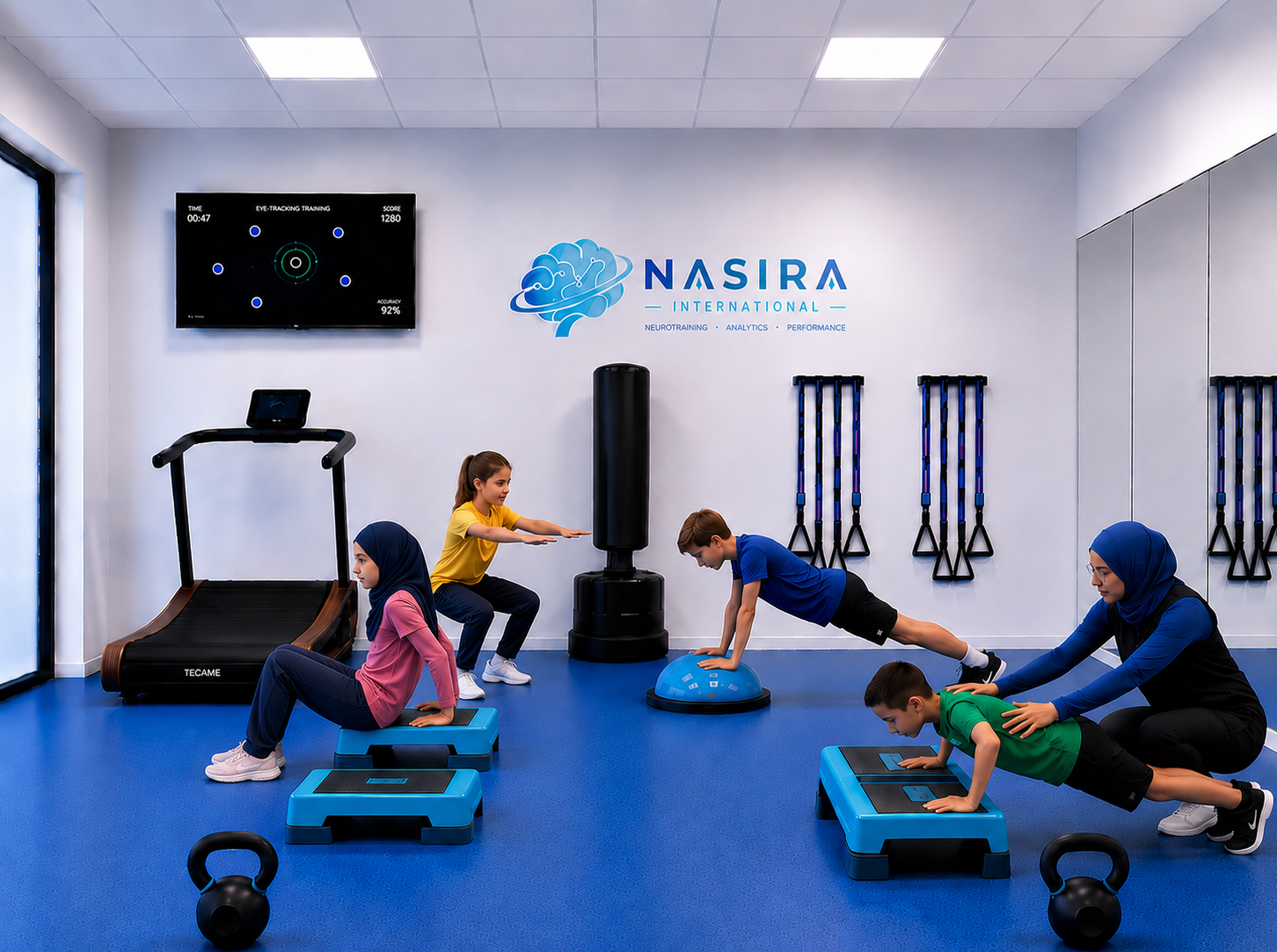
Research shows that combining physical activity with cognitively demanding tasks supports neuroplasticity and increases Brain-Derived Neurotrophic Factor (BDNF), which plays a key role in strengthening neural connections and improving learning efficiency. This leads to better concentration, faster processing, and improved adaptability under pressure.
For this age group, the result is improved attention control, stronger emotional regulation, better coordination, and greater mental flexibility—skills that are increasingly important as school and social demands intensify. During this stage, motivation and emotional responsiveness also change. Training that is engaging, varied, and appropriately challenging helps maintain focus, build confidence, and support resilience.
Each programme is tailored to the individual child’s needs, with optional one-on-one sessions for more focused support.